How To Choose The Right Steel Fabrication Company On The Central Coast
Steel fabrication Central Coast businesses rely on varies widely in quality, and the lowest quote rarely tells the full story. Whether you need metal fabrication Central Coast wide for a structural project, custom steel fabrication for a one-off component, or specialist marine work, the wrong choice can mean cost blowouts, missed deadlines, structural welds that do not meet Australian Standards, or custom work that arrives dimensionally incorrect and cannot be corrected without starting again. For builders, contractors, marine operators and industrial clients, the fabricator you choose becomes part of the project team — and the quality of that relationship shows up in the finished work. This guide walks through exactly what to look for when comparing fabricators, the questions worth asking before you sign anything, and the red flags that tell you to keep looking.
What a Steel Fabrication Company Actually Does
Steel fabrication is the process of transforming raw steel or other metals — stainless, aluminium, mild steel — into a finished product or component through a controlled sequence of steps:
Design and engineering — reading drawings, producing workshop drawings, or designing from a client brief where no drawings exist.
Cutting — plasma, laser or oxy-acetylene cutting to produce blanks from sheet or plate stock; saw cutting for structural sections.
Forming and folding — using press brakes and rollers to bend metal to specified angles and profiles.
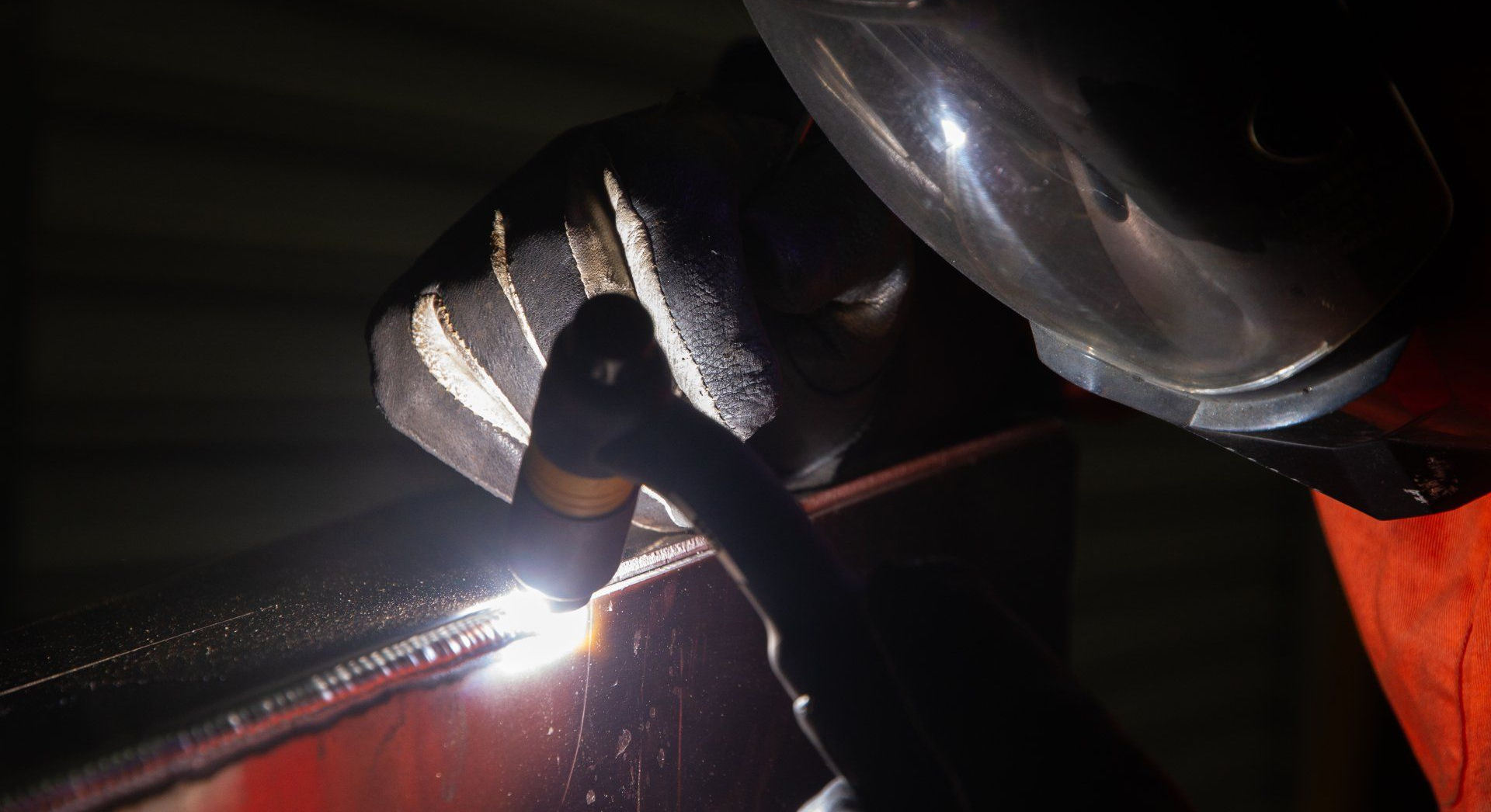
Welding — joining components using the appropriate process for the material and application: TIG for precision stainless work, MIG for general fabrication, GTAW for pipe and pressure applications, stick for structural work.
Finishing — grinding, polishing, blasting, or coating depending on the end use and environment.
Installation — for larger structural components, the fabricator may also handle on-site installation, including fitting, alignment and final connections.
Understanding this process helps you ask better questions and assess whether a fabricator has the capability your project actually requires.
Key Things to Look For When Choosing a Fabricator
Experience and Track Record
Experience in your specific type of project matters more than general years in the trade. A fabricator with a long history of marine stainless work will approach a marine project differently to one whose background is primarily structural steel fabrication Central Coast builders rely on for large-scale projects. Ask for examples of comparable work — not a general portfolio, but projects with similar material, scale and application to yours. For custom steel fabrication, structural steel fabrication and specialist applications like pressure vessels or food-grade fabrication, the fabricator's relevant track record is a primary qualification. Steel fabricators Gosford and Central Coast clients work with regularly will have this history readily available.
Certifications and Compliance
Steel fabrication in Australia is governed by a range of Australian Standards that specify minimum requirements for materials, welding procedures, inspection and testing. Relevant standards include AS/NZS 1554 (structural steel welding), AS 1210 (pressure vessels) and AS 4041 (pressure piping). For food-grade or marine stainless work, additional standards and expectations apply. A fabricator who cannot reference the standards relevant to your work, or who cannot demonstrate how their procedures meet those standards, is a risk. Ask for welding procedure qualifications and inspector certifications — competent fabricators hold these as standard.
Range of Materials and Capabilities
The best fabricators handle the full range of materials relevant to their market: mild steel, stainless steel, aluminium and specialist alloys. Narrow capability can create problems mid-project when a design change requires a different material or process. Sheet metal fabrication, structural work and precision machined components each require different equipment and skills — confirm the fabricator can handle your full scope in-house.
Quality of Welding and Finishing
Weld quality is not always visible until it matters. For structural applications, the wrong welding process or inadequate penetration can create a joint that looks complete but fails under load. For stainless or food-grade applications, poor finishing around welds creates hygiene risks. Ask about the welding processes used for your specific application, the qualifications of the welding staff, and whether inspection and testing are included in the scope. For projects requiring certified welding services on the Central Coast, choosing a fabricator who keeps all welding in-house — rather than outsourcing it — maintains quality control across the full scope.
Turnaround Times and Workshop Capacity
Lead time is a project management reality. A fabricator who quotes a three-week lead time but whose workshop is at capacity cannot reliably deliver — and a delay to fabricated components often has cascade effects on the rest of the project schedule. Ask directly about current workshop load, how much of the work will be fabricated in-house versus subcontracted, and what their process is when a job runs longer than expected. A fabrication workshop Central Coast businesses can rely on for local response is more valuable than a distant fabricator who cannot attend site quickly when issues arise.
Local Knowledge and On-Site Service
For projects that include on-site installation or field service, a local fabricator offers practical advantages: faster site visits, quicker response to installation issues, and the ability to modify components in the workshop and return to site within a day rather than managing freight from a distant workshop. Specialist work like tank welding Central Coast projects is a good indicator of a fabricator's depth of capability — tanks require precision forming, strong weld integrity, and often pressure testing on completion.
Questions to Ask Before You Commit
Before finalising any fabrication engagement, these questions are worth putting to any provider:
- Can you provide workshop drawings for approval before fabrication begins?
- What welding processes will be used for this application, and are your welders qualified for those processes?
- Which Australian Standards apply to this work, and how do your procedures meet them?
- What QA documentation will be provided on completion?
- What is your current lead time and what is the fabrication schedule for this project?
- Will all fabrication be completed in-house, or will any scope be subcontracted?
- What does your inspection and testing process look like for this type of work?
- What is your process if the finished components require modification on site?
A fabricator who answers these questions specifically, without deflection, is operating at a professional level. Vague or dismissive responses are a signal.
Red Flags to Avoid
Vague or incomplete quotes that do not specify materials, processes, finishes or standards are a common issue. A quote that cannot be broken down into individual line items is one that cannot be held to account.
No certifications or welding qualifications — for anything beyond light, non-structural fabrication, the absence of qualified welders and documented procedures is a serious shortfall.
No portfolio of comparable work — if a fabricator cannot show you examples of jobs similar to yours, they may be learning on your project.
Poor communication in the early stages — responsiveness and clarity before the job begins is a reliable predictor of communication during the job. If getting a quote takes multiple follow-ups, getting a delivery update or a change processed will likely be harder still.
Work outsourced offshore or to unknown subcontractors — fabrication outsourced beyond the workshop you visited introduces quality variables that are difficult to manage. For structural, pressure or food-grade work, this is a material risk.
Why Central Coast Businesses Choose EB Metalworks
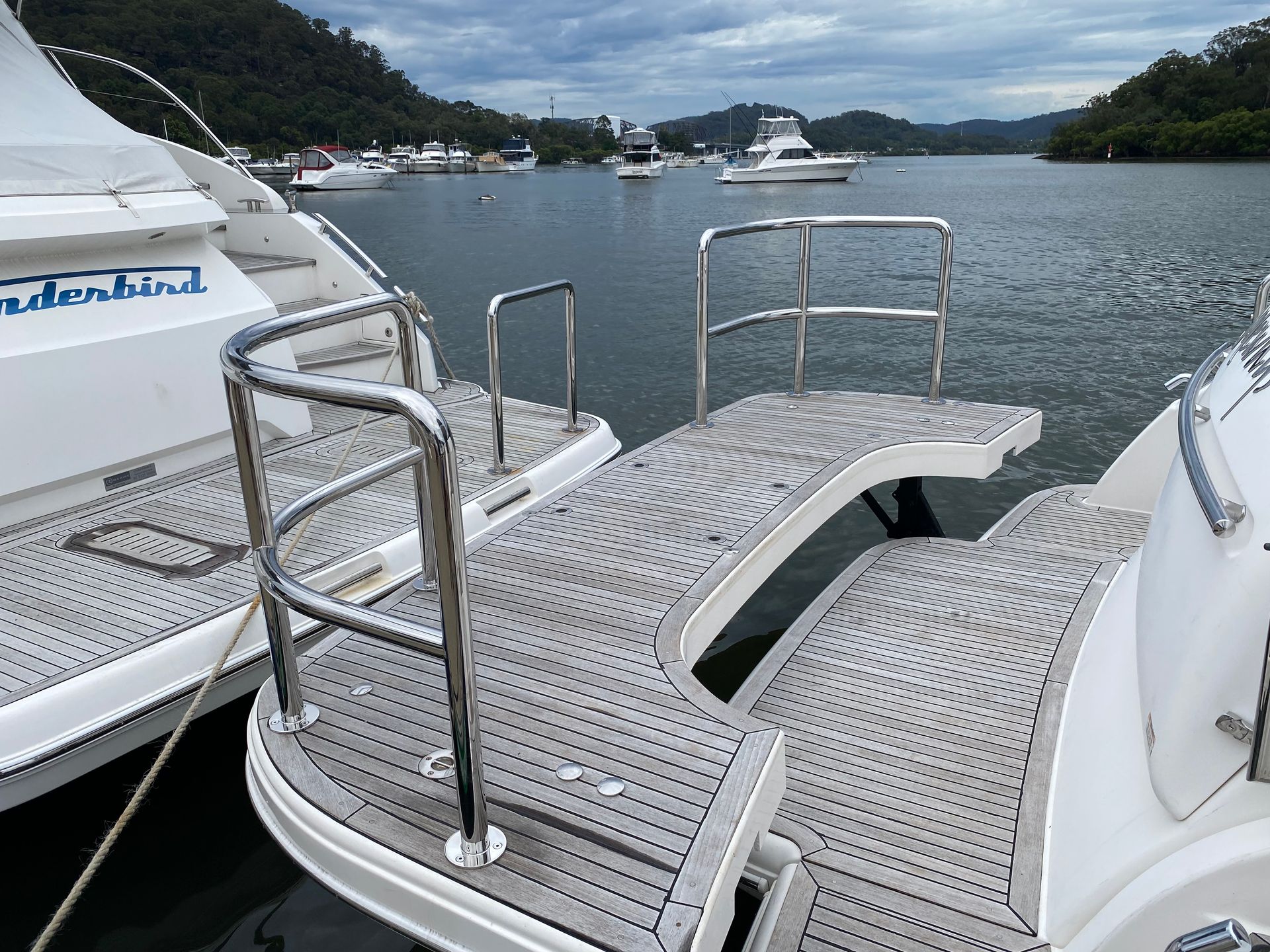
EB Metalworks is a family-owned fabrication business based in Somersby, founded by brothers Ben and Michael. Ben brings trade experience from the food processing and shipbuilding industries, with a specific focus on precision aluminium and stainless steel fabrication. Michael is a qualified shipwright, extending the team's capability into marine engineering, boat repairs and specialist marine installations.
The Somersby workshop is fully equipped for the range of fabrication and welding services Central Coast commercial and industrial clients require — TIG, MIG, GTAW, stick, purge and pressure welding, sheet metal design, structural steel components, custom fuel and water tanks, and marine fabrication. Whether you are searching for steel fabrication near me or specifically need steel fabrication Erina and surrounds, our workshop and mobile team cover the full Central Coast region. For structural and custom jobs, our steel fabrication Central Coast service covers everything from design through to installation. We handle metal fabrication in Gosford and right across the wider Central Coast, Newcastle and Northern Beaches regions, with on-site and mobile services available for clients who need work carried out at their location.
Frequently Asked Questions
What factors affect the cost of steel fabrication?
Material type and volume, complexity of the design, welding process required, surface finish specification, and whether installation is included. Standard mild steel fabrication is generally the most cost-effective; precision stainless or aluminium work for food-grade or marine applications carries a higher cost reflecting the material, skill and finishing requirements.
How long does a steel fabrication project typically take?
Lead time varies with scope and workshop load. A single custom component may be turned around in days; a complex structural package or a series of custom tanks may take several weeks. The best practice is to engage the fabricator early and get a scheduled delivery date as part of the quote.
Can you fabricate one-off or prototype components?
Yes. Custom and one-off work is a significant part of what specialist fabrication businesses handle. Where possible, provide a drawing or detailed specification; where no drawing exists, the fabricator can develop one from your brief.
What materials do you work with?
Mild steel, structural steel, stainless steel (grade 304 and 316) and aluminium. Material selection is driven by the application — structural components, marine use, food-grade contact, agricultural or industrial environments each have different requirements.
What certifications and qualifications are relevant?
Welders can hold qualifications to AS/NZS 2980 and relevant process-specific qualifications. For pressure vessels and piping, AS 1210 and AS 4041 are applicable. Ask your fabricator to specify which standards apply to your project and how their qualifications meet them.
What areas do you service?
EB Metalworks services the Central Coast, Newcastle and Northern Beaches regions from the Somersby workshop, with on-site and mobile services available. Locations include Gosford, Terrigal, Erina, Woy Woy, Kincumber, Berkeley Vale, Cooranbong, Lake Macquarie and surrounding areas.
Is there a minimum order size?
Not for most work. Welding and fabrication Central Coast jobs range from single custom components through to large structural packages. Contact the team to discuss your project scope.
Can you assist with design if I don't have drawings?
Yes. The team can develop workshop drawings from a client brief, photograph or concept sketch. Having documentation to reference before fabrication begins reduces the risk of dimensional errors and makes it easier to make changes before material is committed.
At EB Metalworks, we are here to discuss your project — whether it is custom steel fabrication, structural steelwork, marine components or specialist tank work. Call us on 0432 648 534 or visit our website to get in touch with our team.